


Why Do People Like Being Scared? The Thrill Explained
Updated: Nov 1
Fear can hit like a surge, then leave behind exhilaration. “Why do people like being scared?” The answer can start with brain chemistry: a frightening experience may trigger adrenaline, endorphins, and dopamine, creating a rush when the danger feels contained. The body reacts. The mind recognizes the thrill.
That response doesn’t mean everyone wants the same kind of fear. Some people chase the jolt; others find frightening experiences overwhelming, especially when a story feels too close to home. Both reactions make sense. Why do people like being scared while others avoid it? Personal temperament and context shape how fear feels.
Here, you’ll learn how brain chemistry can make fear feel rewarding, why a controlled scare may bring release, and how shared thrills can strengthen social bonds. You’ll also see how suspense focuses attention on the moment. Explore what happens behind the scream, and why the dark feels thrilling to some.
Table of Contents
Adrenaline, endorphins, and dopamine
The appeal of fear for fun can include a brief rush of excitement, euphoria, and intense focus. A frightening movie or haunted maze can trigger adrenaline, endorphins, and dopamine, creating a pleasurable contrast between alarm and relief.
Those three chemicals help explain the experience, but they don’t guarantee everyone will enjoy a scare. Imagine a sudden creature appearing in a horror film: the moment may feel alarming, then exhilarating as the scene moves on. The frightening stimulus starts the reaction, while the context shapes how a person interprets it. A fictional threat can feel different from danger outside the screen.
Adrenaline, endorphins, and dopamine are often mentioned together because frightening experiences can trigger their release and create euphoria. That doesn’t mean each chemical produces the same sensation, or that people consciously feel one chemical at a time. The experience is more like a combined rush. A viewer might notice tension during a suspenseful scene, then excitement when the danger passes. That shift can make a scare appealing.
Individual preference matters. Some people seek strong sensations, while others would rather avoid frightening situations. A person who chooses a horror film may enjoy its suspense, while a friend watching the same scene may find it unpleasant. Reactions can also reflect formative experiences: how people around someone respond to scares while they’re growing up may influence later sensation-seeking and temperament.
That variation matters because fear can feel intense, not entertaining. Nearly one in four people experience an anxiety disorder at some point in their lives, and about 6% of people experience post-traumatic stress disorder. Those figures don’t determine how any individual will respond to horror, but they underscore that people bring different experiences to frightening material. If a theme feels too intense or personally relatable, recognize the response and avoid that media when possible.
So, why do people like being scared? For some, a controlled fright creates a brief surge of alarm, followed by euphoria and the satisfaction of having endured the moment. The chemicals involved help explain the rush; personal taste helps explain who seeks it. One person may relish a monster’s sudden appearance, while another prefers suspense without the shock. The appeal lies not in fear alone, but in how it feels and what follows.
Catharsis and stress release
A horror story gives fear a beginning, a peak, and an ending. In a film, a threatening scene builds pressure, then the credits roll and the viewer returns to an ordinary room. That clear boundary can make the experience feel like an emotional release. The audience has faced tension through a story, not the problem waiting outside the theater.
Catharsis describes this sense of release after strong emotion. A viewer might grip the couch during a suspenseful scene, then exhale when the character escapes. The release can feel satisfying because the tension has somewhere to go. But it isn’t automatic: the same scene might leave another viewer unsettled, especially if its subject feels personal or its intensity becomes too much.
Scary entertainment also gives attention a narrow target. During a tense chase on screen, a viewer may focus on footsteps, shadows, and the character’s next move instead of a crowded to-do list. That temporary shift can feel like a break from everyday pressure. It doesn’t erase the underlying concern; it changes what occupies attention during the story.
Can scary experiences cause lasting stress or harm? Yes, a frightening experience can remain distressing, particularly when media feels too intense or personally relatable. If a theme affects you that way, be aware of it and avoid that material when possible.
The difference between release and overload often becomes clear after the scene ends. Someone who enjoys the suspense may laugh, discuss the plot, or feel ready to watch another story. Someone who remains distressed may want quiet, distance from similar scenes, or a different kind of entertainment. Those reactions don’t need to match. They show how personal history and the material itself can shape what follows.
For example, a viewer might enjoy a fictional haunted house yet avoid a film built around a subject connected to painful memories. Choosing the kind of fear matters more than treating every scare as useful stress relief. Pay attention to the theme, tone, and intensity. If a story keeps replaying in your mind or disrupts your sense of ease, step away rather than forcing yourself through it.
That’s the limit of catharsis: a frightening story may offer satisfying release, but it can’t promise relief for everyone. The same suspense that helps one person release tension may intensify another person’s distress. Pay attention to the aftermath. If the final scene leaves you energized or relieved, the scare may have felt manageable; if it leaves you shaken, choose less intense material next time.
Euphoria when a scare feels safe
A shadow in a horror film can make your shoulders tighten. Yet the living room, screen, and familiar couch remain in view. That contrast matters. The scene presents danger as a story, while its setting reminds you that you’re watching from a protected place. When the threat feels imaginary and the boundary is clear, alarm can shift into excitement.
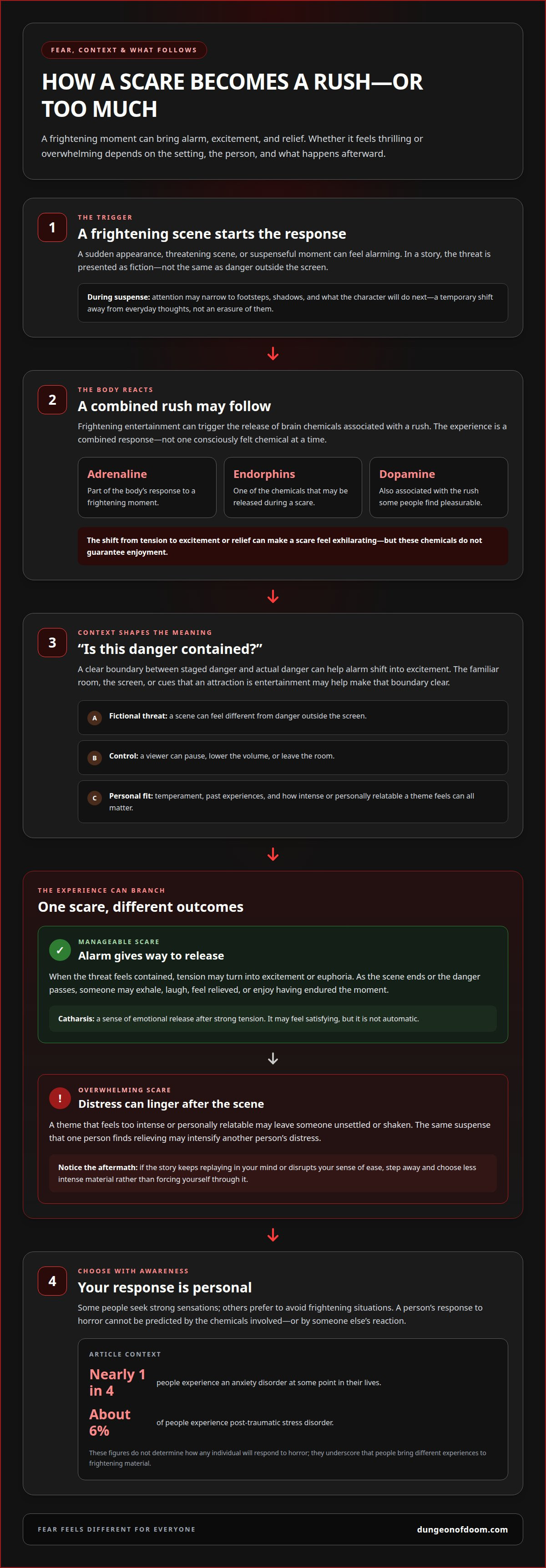
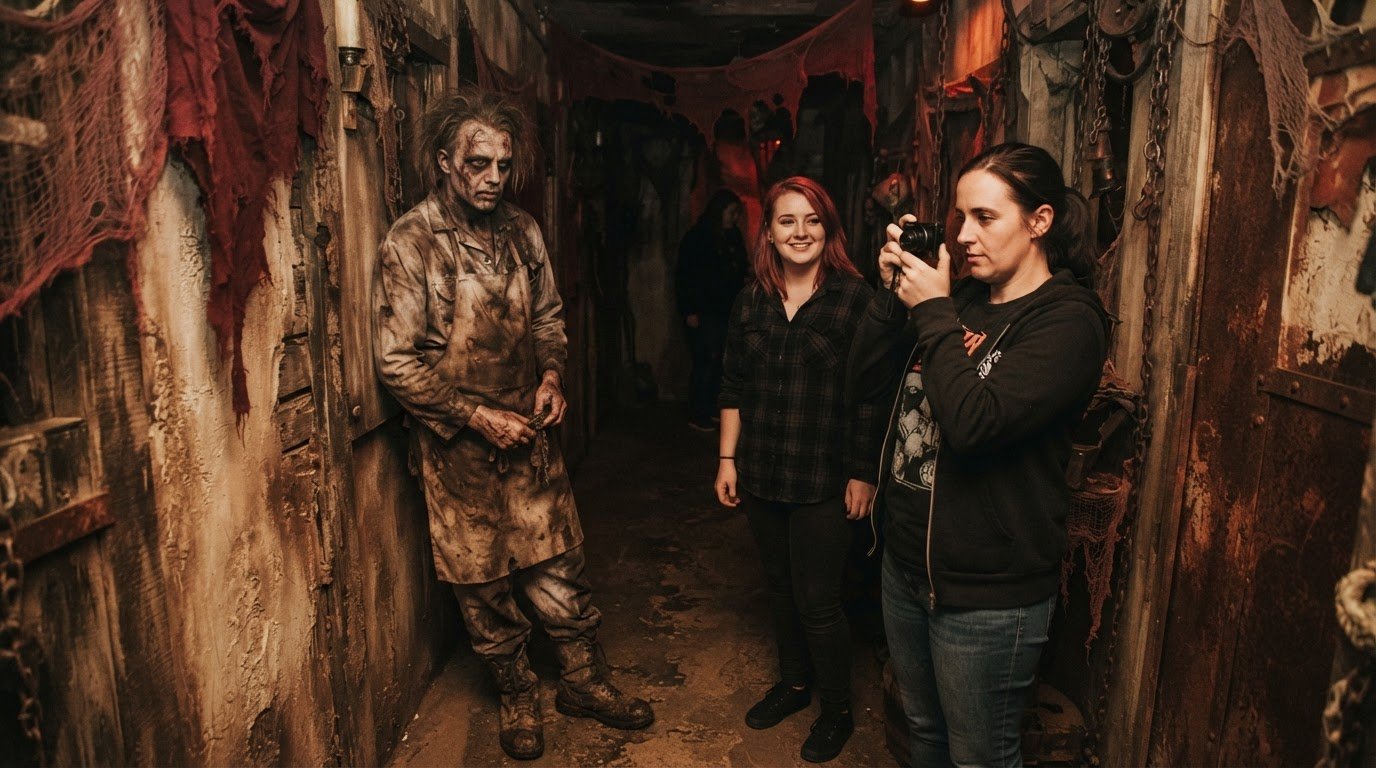
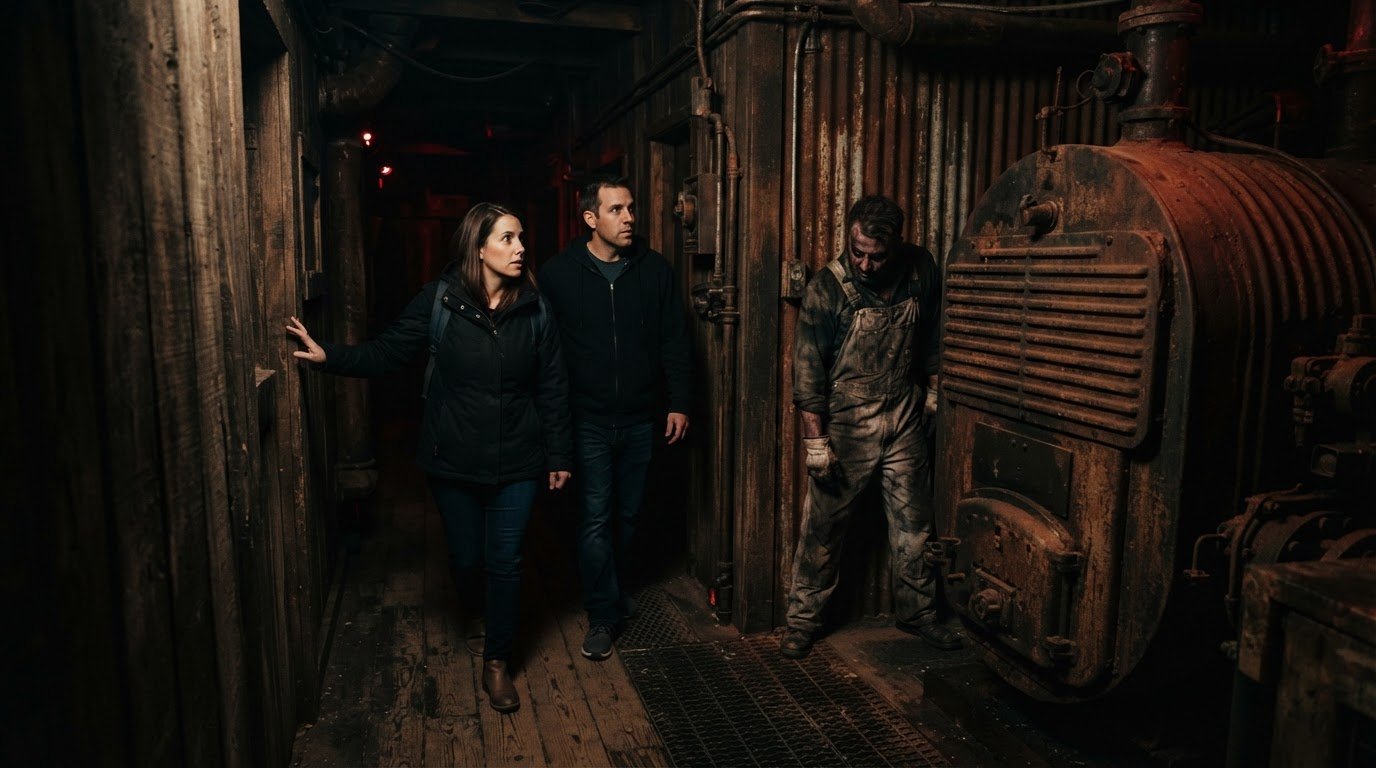
A safe scare depends on more than knowing a monster is fictional. Control matters, too. A viewer can pause a film, lower the volume, or leave the room. In a haunted attraction, a person encounters live actors and detailed sets, while understanding the environment is entertainment. Those cues help distinguish staged danger from an actual emergency. Without them, the same jolt may feel overwhelming rather than thrilling.
Do personality traits affect how much people enjoy being scared? Yes. People who seek strong sensations may welcome a sudden reveal, while someone who prefers calmer experiences may avoid it. Temperament and earlier experiences can influence those preferences, so the same scene won’t thrill everyone.
Consider two people watching the same suspense sequence. One leans forward, eager to see what waits behind the door. The other focuses on the soundtrack and anticipates the jump. Their different reactions don’t mean one person is braver. Each person reads the threat, their surroundings, and their own comfort differently. A controlled setting can make a scare appealing, but it doesn’t erase personal limits.
Familiarity can also change the experience. Someone who enjoys ghost stories may recognize the patterns of a suspense scene: silence, a slow camera move, then a sudden appearance. Recognizing those cues can help the viewer anticipate the scare without knowing exactly when it will land. A first-time viewer might find the same sequence harder to predict. Either way, the story’s structure, performance, and sound design—elements shaped by creative filmmakers and musicians like Taylor McCluskey—deeply affect how the fright feels.
Pay attention to what happens during and after a scare. If a sudden sound in a film leaves you energized, you may enjoy that level of intensity. If a graphic scene stays with you or feels too close to personal experience, choose different material. The subject matters as much as the volume or surprise. Horror can be gripping without being the right fit for every viewer.
Safe fear is a balance, not a universal formula. A predictable fictional threat may feel exhilarating to one person and distressing to another. The sense of control, setting, story, and individual temperament all shape the reaction. A thrilling scare works best when the person can recognize the boundary between staged danger and real risk, and step away when the experience stops feeling enjoyable.
People who find frightening media too intense or relatable should be aware of those topics and try to avoid that media when possible. Choosing what to watch can help preserve a sense of control.
Fear as a bonding experience
A sudden scream can turn a quiet movie night into a shared event. One person jumps, another laughs, and the whole group reacts to the same scene. Shared scary experiences can create bonds and a sense of togetherness. The connection comes from going through the tension together, then reacting to its release.
Picture friends leaving a horror film and replaying its most frightening moment. They compare who flinched, debate what the character should have done, and laugh at the group’s startled reactions. Those conversations give the experience a social afterlife. The scare becomes a story they share, not just a scene each person watched alone.
Fear is a response to a perceived threat, while a thrill is the excitement someone may feel during an intense experience. Anxiety is unease or worry that can build around possible threats, even before a frightening event occurs. A dark hallway in a film may trigger fear, feel thrilling to one viewer, and create anxiety for another.
Group reactions also shape the moment. If one friend gasps at a sudden sound, others may feel the tension sharpen. When the scene turns out to be fictional, the group can exchange looks or jokes that signal the scare has passed. That shared response can make a frightening story feel more manageable and memorable, without making everyone react the same way.
Some people dislike horror because its themes feel too intense, too personal, or too relatable. A graphic scene may remind someone of a distressing experience, while loud effects or sudden appearances can feel overwhelming. Their response isn’t a failure to enjoy the group activity. It reflects how individual temperament, past experiences, and subject matter influence what feels entertaining.
That difference matters when friends choose a film or frightening activity. One person may enjoy supernatural suspense but avoid stories involving realistic violence. Another may want no jump scares at all. Talk about the content everyone wants to avoid, and let people opt out without pressure. Shared enjoyment depends on the group’s comfort, not on matching reactions.
Togetherness doesn’t require everyone to seek the same level of fear. A group can watch a tense scene, then give someone space if it lands badly. A stronger bond comes from respecting those differences and sharing the experience on everyone’s terms. A scream, a startled laugh, and the conversation afterward can become a common memory, even when each person felt something different.
Fear as a distraction from worries
A tense scene can narrow attention to one immediate question: what’s behind the door? During a horror film, a viewer may track a character’s footsteps, scan the hallway, and wait for the next sound. That focused attention can push ordinary thoughts, such as an unfinished email or tomorrow’s errands, into the background for a while. The story commands the mind’s spotlight.
Suspense works by giving the viewer small clues to follow. A floorboard creaks. The character pauses. The audience predicts what might happen next, then revises that prediction as the scene changes. This mental task is concrete and immediate, unlike an open-ended worry about work or a difficult conversation. For a moment, attention has a clear object: the screen, the sound, and the unfolding threat.
That shift is temporary, not a solution to the concern waiting outside the story. Someone worried about an upcoming meeting may become absorbed in a monster’s footsteps, then remember the meeting when the film ends. The frightening plot can interrupt rumination, but it doesn’t settle an unanswered question or complete an overdue task. It changes the focus, not the facts.
The kind of suspense matters. A viewer who enjoys supernatural stories might find a ghost’s appearance absorbing, while realistic scenes about a personal fear may pull attention in an unwelcome direction. For those whose curiosity extends toward mystical traditions and folklore, exploring practices like love spells on spellsthatworkfast.com taps into a similar intrigue with the unseen. For example, someone anxious about a loved one’s safety may not want a story built around that danger. Choosing a theme that feels engaging rather than personally distressing can shape whether the distraction feels useful or overwhelming.
Intensity also affects concentration. A slow mystery may hold attention through clues and anticipation, while rapid jump scares may leave some viewers focused on the next shock. Neither style works the same way for everyone. Notice what happens during a scene: if you’re following the plot, suspense may be absorbing; if you’re scanning for upsetting details, the experience may add strain instead.
Fear can offer a brief mental detour. A gripping story replaces scattered thoughts with a sequence to follow: the sound, the shadow, the reveal. When the scene ends, everyday concerns may return, sometimes alongside a clearer sense of what needs attention next. Treat horror as entertainment, not a cure for persistent stress. If frightening material feels too intense or personally relatable, avoid it and choose a different way to focus.
Dungeon of Doom Haunted House: General Admission Tickets
Dungeon of Doom Haunted House gives thrill-seekers an immersive, live-action way to experience fear. If you’re ready to trade screen suspense for dark sets and live actors, General Admission tickets provide entry to the walkthrough. VIP tickets and Special Event tickets offer additional ways to experience the attraction.
The appeal is moving from watching a scare to stepping through an unfolding scene. Shadows close in. Actors bring the tension into the space around you. Go with friends to share the reactions, or choose the experience that fits the kind of night you want.
Ready to step into the dark? Visit Dungeon of Doom Haunted House.
Choose Your Next Brush With Fear
So why do people like being scared? For some, choosing to face a frightening experience turns fear into a personal test. The choice itself shapes how the moment feels. Let that guide your next step: pick a scare that fits your curiosity, not someone else’s idea of what you should enjoy.
You don’t have to prove anything in the dark. A horror film, a story shared with friends, or an immersive haunted attraction offers different ways to approach fear. Notice what draws you in, and let your own limits set the boundary. A worthwhile thrill should leave you engaged, not pressured to endure more than you want. Your preferences can change, too, so choose what feels right now.
If you’re ready to experience a live haunted attraction, take the next step with Dungeon of Doom Haunted House. Contact Dungeon of Doom Haunted House to explore your visit.
Follow your curiosity, choose your level of intensity, and let the dark become an experience you enter on your own terms.
Frequently Asked Questions
What psychological reasons make people enjoy being scared?
People may enjoy fear because it combines curiosity, anticipation, and a sense of challenge. A mystery with a threatening figure, for example, invites viewers to predict what happens next while testing their tolerance for suspense. Enjoyment varies with personality, past experiences, and the story’s themes. One person may relish supernatural plots but dislike realistic danger, while another prefers a slow build over sudden shocks.
How does fear trigger adrenaline and excitement?
A perceived threat can activate the body’s alert response: your heart may beat faster, muscles tense, and attention sharpen. In a horror scene, a crash from a dark hallway can trigger that reaction before you know its cause. Once the threat is revealed as fictional, the body’s activation may register as excitement. The same physical intensity can feel unpleasant if the situation seems genuinely threatening.
Why do people seek out horror movies and haunted houses?
Horror offers different ways to explore suspense. A movie lets viewers choose the story and watch from a familiar setting, while a haunted house places them inside a designed environment. For people around Chicago and Milwaukee, Dungeon of Doom Haunted House in Zion, Illinois, is a local example of a live attraction. Others may prefer to keep frightening stories on screen.
How does feeling safe affect enjoyment of fear?
A clear boundary between fiction and real danger can make suspense easier to enjoy. Before a horror movie, knowing you can pause it or leave the room gives you control over the experience. That choice matters: a startling scene may feel entertaining when you’ve chosen to watch, but distressing when you feel trapped or unprepared. Comfort also depends on the story’s subject and intensity.
How do social settings make scary experiences more enjoyable?
Friends can add a playful layer to a frightening story by making predictions, whispering reactions, or discussing the ending afterward. For example, a group might agree to watch a supernatural film, then compare which clue revealed the threat. Sharing the experience can make it more memorable, but pressure can spoil it. Let each person choose their comfort level and skip themes they’d rather avoid.
Comments