


Psychology of Fear in Haunted Attractions: Why Safe Scares Appeal
A short, controlled fright can raise your heart rate and sharpen your breathing, then give your body room to settle once the threat passes. The psychology of fear in haunted attractions rests on that contrast: your brain reacts to a convincing scare, while the experience remains a chosen one you can leave. Repeated playful fear can also give people practice coping with arousal and recovering their composure.
The jolt is only part of the story. A scare shared with friends can spark laughter, conversation, and closeness, while unexpected moments keep anticipation alive. This article explores how safe scares work across the lifespan, how repeated exposure can change the way fear feels, and why facing the dark together may bring people closer.
Table of Contents
Safe scares across the lifespan
A staged threat can trigger a real fear response, even when visitors know they’re in an attraction. The psychology of fear in haunted attractions begins with this contrast: the body reacts, while visitors retain the choice to stop.
Physical Contact During Scares
Physical contact during a scare means touching or grabbing someone while reacting to a staged threat. A visitor might grab a friend’s sleeve when an actor appears, then let go once the moment passes.
That contact can make a scare feel more immediate and may support a sense of closeness afterward. Visitors have reported feeling closer after haunted houses, particularly when they felt scared and made physical contact. Reactions vary: one person may reach for a companion, while another prefers space. Respecting those differences helps keep the shared moment comfortable.
Physical and Emotional Reactions
Physical and emotional reactions are the body’s and mind’s responses to a perceived threat. A sudden sound may quicken breathing, raise the heart rate, and bring fear, excitement, or both.
Darkness can heighten perceived threat by limiting sight and drawing attention to other cues. People also differ in sensation seeking, which can affect whether an intense scene feels exciting or overwhelming. At any age, a safe, repeatable experience of playful fear can offer practice coping with arousal and regaining composure. That’s a possible learning experience, not a guarantee that every visitor will benefit in the same way.
Guest Safety and Panic Risks
Guest safety and panic management depend on keeping the experience clearly framed as chosen entertainment, with an option to stop. That distinction matters because a convincing simulated threat can still trigger a fight-or-flight response.
Age recommendations and intensity levels vary among haunted attractions, with no single age cutoff or universal scale. Some attractions provide age guidance or describe the intensity visitors can expect. Those details help a group decide whether an experience suits them. Anyone who feels overwhelmed should be able to stop, rather than being pressured to continue. Having that choice helps separate recreational fear from unwanted distress.
Relief After a Scare
Relief after a scare is the shift that can follow when a perceived threat ends. It helps explain why an intense moment may give way to pleasure or calm.
Imagine tension building in a hallway before an actor suddenly appears. When the encounter ends, the body can begin to settle; dopamine released after a perceived threat is dealt with can produce pleasure and relief. A central question in the psychology of fear in haunted attractions is how that shift feels to each visitor. Adults and children may experience playful fear as practice recovering from arousal, but reactions and comfort levels remain individual.
Exposure and habituation
Habituation is a reduced response after repeated exposure to a familiar cue. In a haunted house, someone who has seen the same masked figure before may still startle, but feel less uncertainty about what comes next. That shift doesn’t mean fear has vanished. Familiarity can change how visitors interpret a threat, making the encounter feel more like a thrill than a danger.
That distinction matters. On a first visit, every creak may sound like a warning; on a later visit, someone may notice how the scene is built. Repetition gives the brain a chance to recognize patterns, such as a door opening before an actor appears. Yet anticipation can still create tension, especially when a familiar setting changes its timing or adds a new cue.
A study of visitors to a high-intensity haunted house found less brain activity in response to stimuli and less anxiety after exposure. The finding suggests that a strong scare experience can be followed by a changed response, but it doesn’t show that everyone reacts the same way. Each person’s experience depends on the intensity they encounter, their prior exposure, and how they interpret the cues.
Horror media offers another example of repeated contact with frightening material. A study found that people who regularly consumed horror media were more psychologically resilient during the COVID-19 pandemic than people who didn’t consume it. This association doesn’t mean horror makes everyone resilient, or that watching a film is identical to moving through a dark attraction. It does show why researchers consider how people engage with fear, not just whether they experience it.
Signs of habituation may include recognizing a sound cue, regaining composure faster, or feeling curious where uncertainty once dominated. These changes don’t require chasing greater intensity. Repeated exposure is most informative when someone notices their response without treating endurance as a test. A familiar scare may feel different another night, especially when the setting, companions, or expectations change.
Want to experience how staged cues build suspense in a physical setting? Explore an immersive haunted attraction and notice which moments feel familiar, and which still catch you off guard.
Novelty and shared anticipation
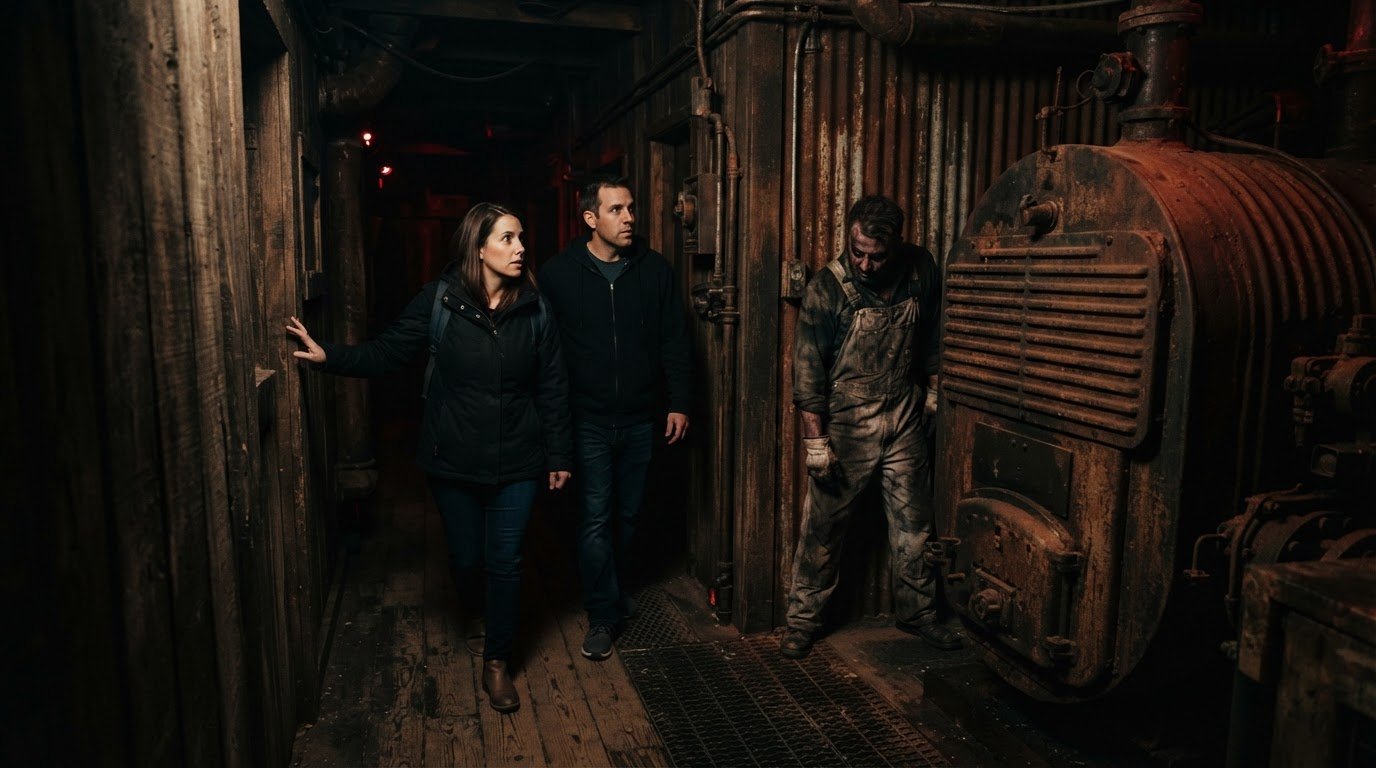
A new setting gives the mind fresh details to interpret before a scare begins. During a Halloween walkthrough, a crooked portrait, a distant scrape, or a narrowing corridor can prompt visitors to imagine what happened there. These cues build a story in the visitor’s mind. The attraction doesn’t need to reveal the threat immediately; uncertainty gives anticipation room to grow.
Slow-building cues encourage people to anticipate danger and imagine what might happen next. A light flickering beyond a doorway may seem ordinary at first. Add a dragging sound, then let the hallway fall quiet, and visitors begin filling the silence with possibilities. That mental prediction can make the next movement startling, even when visitors know the scene is staged.
Novelty also shapes the social side of the experience. Guests have described doing something out of the ordinary as creating shared anticipation and excitement, making an outing feel more meaningful. Friends waiting at the threshold may trade guesses about what lies beyond, then enter together. Their expectation becomes part of the event, not merely a pause before the scare.
Unfamiliar details matter because visitors don’t all interpret them the same way. One person may hear a metallic clang and expect a hidden door; another may focus on a shadow crossing the wall. That difference can spark conversation before the reveal. Suspense can come from what a visitor thinks a cue means, not only from the actor or effect that follows.
Consider how a scene can change as its cues accumulate: a cold-looking room, a chair facing the wall, and a faint whisper from behind a curtain. Each detail offers a clue, but none explains the whole scene. Visitors may build different stories, then compare them afterward. For a group, that shared guessing can make an unfamiliar experience feel like something they own together, giving the anticipation its own lasting charge.
A haunted attraction’s slow-building cues can prompt visitors to anticipate danger and imagine what may happen. Suspense lies in that interval of expectation: attention turns to possibilities before the outcome is known. Because the imagined danger is still undefined, visitors can mentally complete what the cues leave open, allowing anticipation to gather without an immediate reveal. The experience draws on both the cue and the prediction it encourages.
Post-attraction laughter and conversation
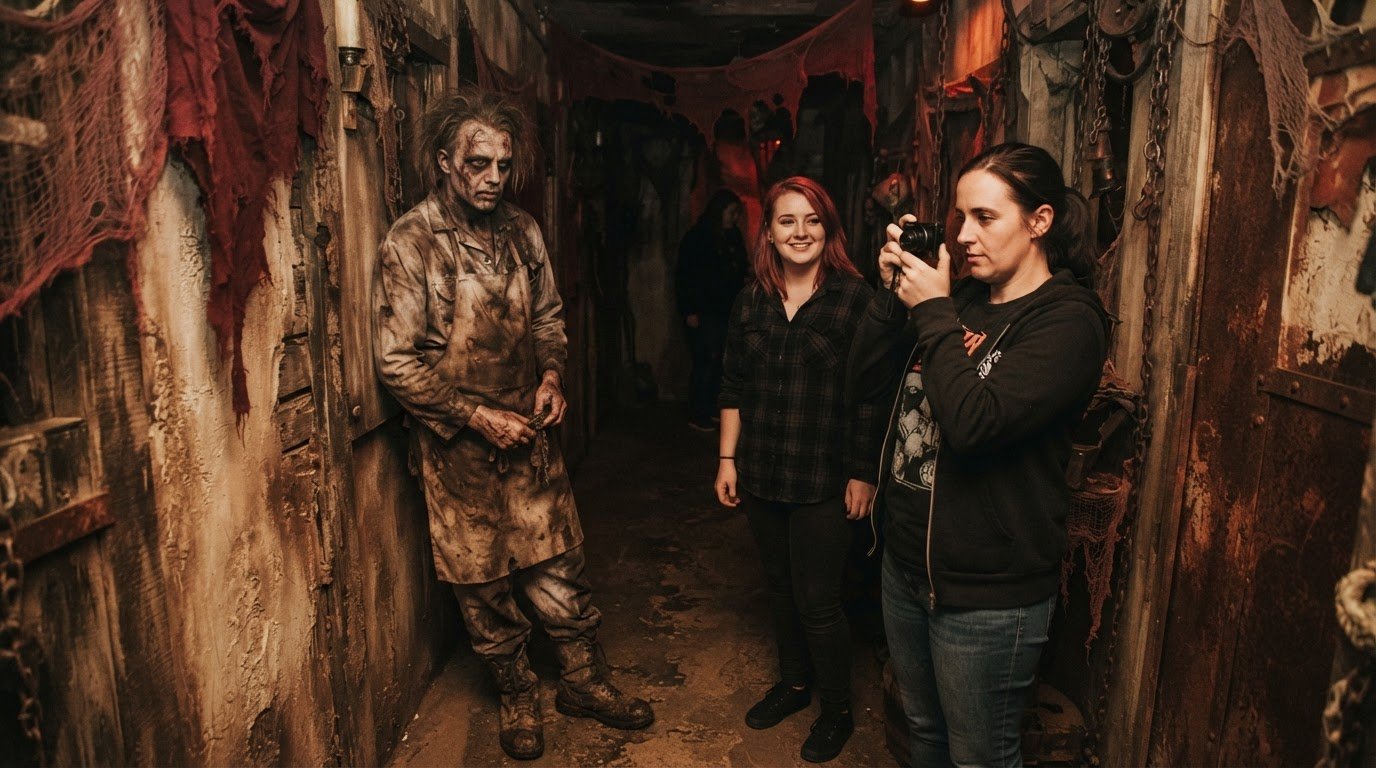
After a final scare, laughter can release tension built during the walkthrough. A visitor who flinched at a sudden appearance may laugh moments later, once the actor is gone and the scene has ended. The shift doesn’t erase the fear. It gives the group a way to respond together as the immediate threat recedes.
Conversation helps visitors put the experience into words. One friend might describe the sound that made them freeze, while another remembers the figure appearing from the side. Comparing those reactions turns a blur of quick impressions into a story the group can share. The details matter: who jumped, which room felt most intense, and what each person expected to happen next.
Teasing can become part of the retelling, too. A friend might jokingly recall how someone grabbed their sleeve at a sudden noise. When the teasing is welcome, it can turn a startled reaction into a shared anecdote rather than an embarrassing moment. Guests have described laughing, talking, and teasing one another after a haunted house as ways to cement their bond.
That social exchange can reveal how differently people experienced the same scene. Someone who laughed through a corridor may have been masking nerves; someone quiet afterward may still be processing the scare. Asking, “Which moment caught you off guard?” invites a specific memory without assuming everyone felt the same. The group can compare reactions instead of ranking who was brave or scared.
Even a short exchange can shape what visitors remember. A scream followed by laughter, a friend’s dramatic retelling, or a shared joke about a missed cue can become the part they repeat later. Those conversations connect the fear to the group’s reactions, making the attraction more than a sequence of effects. The shared story can outlast the moment itself.
For a group leaving a haunted attraction, try this simple sequence: name the moment that startled you, describe what you expected, then listen to how a companion remembers it. If laughter follows, let it release the tension. If someone needs quiet first, give them space before asking for the story. That brief pause respects different reactions while keeping the conversation open.
In this way, laughter at a horror attraction can release built-up tension, giving visitors a moment to settle before continuing their conversation.
Haunted attractions and social closeness
Haunted houses can turn a shared challenge into a feeling of connection. Lighting, sound, and sets create fear by limiting what visitors can see, directing attention, and encouraging them to imagine a threat. In a group, one person’s reaction can quickly affect everyone nearby.
Social groups shape how visitors experience an attraction. A companion’s frightened expression or sudden gasp can intensify someone else’s fear through emotional contagion. Under stress, people may also seek closeness and reassurance, supporting one another as they move through a frightening scene.
Researchers surveyed nearly 4,000 haunted-attraction guests about fear, enjoyment, and closeness to someone in their group. They also conducted 20 in-depth interviews about how the experience affected emotions and relationships. Guests reported feeling closer afterward, and the increase appeared among people who were already close and those who weren’t close beforehand.
Group size can influence the experience, too. Researchers found a positive association between the number of friends in a group and participants’ tonic arousal during a haunted-house visit. That association doesn’t prove that adding friends causes a stronger response. It does suggest that companions may be part of the experience. A friend watching a doorway can draw attention to it; a startled reaction can sharpen the group’s awareness.
Shared fear may also create moments of mutual support. Imagine someone hesitating at a dark threshold while a companion stays close. That response can make the passage feel like a challenge they faced together. Afterward, they may remember who reached for a hand, who encouraged the group onward, or who spotted the actor first.
Closeness doesn’t require matching reactions. One visitor may laugh, another may pause, and someone else may study the set. Those differences give the group more to discuss without turning fear into a contest. A useful takeaway is to notice how companions respond, offer support without mocking them, and let each person describe the moment in their own words.
The social effect can depend on existing relationships. Friends who already trust each other may find it easy to seek reassurance, while newer acquaintances can learn how one another responds under pressure. A haunted attraction provides a shared experience, but people shape its meaning through their reactions and later conversation. Treat the shared scare as an opening for connection, not a guarantee that every group will bond.
Dungeon of Doom Haunted House
Dungeon of Doom Haunted House lets you experience staged fear firsthand, with immersive sets and live actors creating the tension explored in this article. If you want to move beyond reading about anticipation, surprise, and shared reactions, experience them in a haunted walkthrough in Zion, Illinois, serving visitors from Chicago and Milwaukee.
Choose General Admission Tickets, VIP Tickets, or Special Event Tickets for your outing. A visit gives friends a shared experience to react to together, whether they leave comparing the moment that startled them or laughing about who jumped first.
Ready to face the dark and make your own memories? Contact Dungeon of Doom Haunted House.
Choose Your Next Encounter
Fear is more than a jolt in the dark. It’s also a chance to notice how you respond, what surprises you, and how a shared experience shapes the conversation afterward. Let the psychology of fear in haunted attractions guide your next choice: decide what kind of intensity interests you, then bring people whose reactions you’re curious to discover.
At Dungeon of Doom Haunted House, the theory meets a shadowed walkthrough shaped by immersive sets and live actors. Visit with friends and let each person experience it in their own way. The moments you remember may be the ones that caught you off guard, or the reactions you share once the darkness is behind you.
Ready to step into the experience? Contact Dungeon of Doom Haunted House and make your next outing a story worth telling.
Frequently Asked Questions
Can a short, safe fright help the body too?
Yes. A brief, chosen scare can give the body a short burst of arousal, followed by recovery once the perceived threat ends. Someone startled by a sudden sound, for example, may notice their breathing quicken, then settle as the scene changes. That contrast can make a recreational scare feel energizing. It isn’t a substitute for healthcare or treatment for physical or mental health concerns.
Can playful fear build resilience against anxiety?
Playful fear can offer practice noticing discomfort and regaining composure, but it doesn’t guarantee protection from anxiety. Someone might start with a mildly suspenseful scene, recognize their response, and choose whether to continue. That sense of agency can make the experience feel manageable. Resilience develops through many influences, so a haunted attraction is recreation, not a prescribed way to treat anxiety.
What Counts as Recreational Fear, and How Does It Work?
Recreational fear is fear experienced during an activity someone chooses for excitement, such as entering a staged haunted setting. The imagined threat feels vivid, but visitors understand that the context is entertainment and can decide whether to participate. For example, a shadow behind a curtain can trigger a startle, while knowing it belongs to a designed scene helps someone interpret the moment as play.
What good can a good scare do?
A good scare can offer a memorable shared challenge, a chance to notice your reactions, and an amusing story to tell afterward. A visitor might realize they were braver than expected, or discover that a friend’s gasp made them jump, too. The value lies in the chosen experience and what someone takes from it, not in assuming every scare improves health or relationships.
What psychological mechanisms make haunted attractions frightening?
The brain combines sensory cues, expectations, and context to judge possible danger. A dim room can obscure details, while a sudden sound draws attention to an uncertain source. If an actor appears where someone least expects, the mismatch between prediction and reality can produce a strong startle. These mechanisms help explain why a staged scene can feel intense even though the threat isn’t real.
Why do people enjoy being scared in haunted houses?
People may enjoy haunted houses because they can seek intense sensations within an entertainment experience they choose. The appeal can include suspense, surprise, curiosity about the scenes, and satisfaction at reaching the exit. Personal preferences shape the balance: one visitor may crave sudden surprises, while another prefers slow tension. Enjoyment isn’t universal, and feeling overwhelmed differs from finding a scare thrilling.
How do anticipation, surprise, and uncertainty affect fear in haunted attractions?
Anticipation lets the mind imagine what a cue might mean; uncertainty keeps several possibilities open. Surprise lands when events differ from a visitor’s expectations. Picture a quiet doorway: a faint scrape may lead someone to expect movement, but an actor emerging from another direction breaks that prediction. The timing and source of a cue can make the moment feel sharper than either detail alone.
How do haunted attractions differ from real threats in how the brain processes fear?
The body can react to a staged threat much as it reacts to perceived danger, but the setting provides a different context. A ticketed attraction, theatrical sets, and the understanding that the scene is entertainment help visitors interpret the event as chosen play. A real threat doesn’t come with the same agreed framework or sense of control, so fear may not resolve in the same way.
Comments